July 2026
Healthcare Laundry Services: What Hospitals and Care Homes Need to Know
From patient gowns to surgical textiles, healthcare laundry services carry a compliance obligation that goes far beyond ordinary washing. Here is what every NHS trust, private hospital, and care home manager needs to understand before choosing a provider.
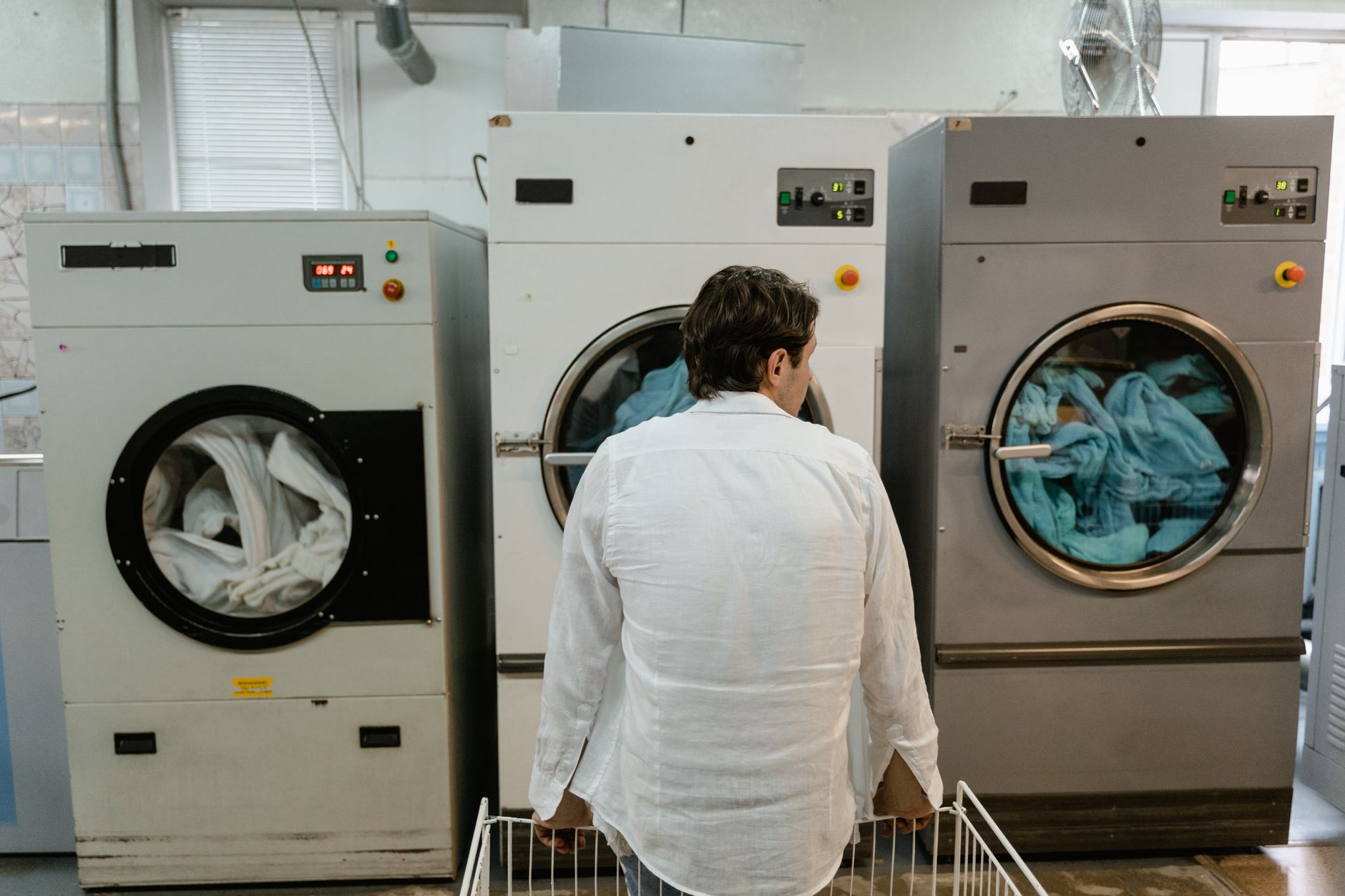
Healthcare laundry services are not the same as commercial laundry for hotels or restaurants. The stakes are different. Contaminated linen is a direct infection risk. A missed thermal disinfection cycle is not just an inconvenience — it can harm patients and put your facility in breach of national standards. If you are responsible for linen procurement or laundry in a healthcare setting, this guide covers what the regulations require, what to look for in a provider, and how outsourcing typically compares to running your own on-premises laundry.
Why healthcare laundry services have their own rules
Hospitals, care homes, dental practices, and GP surgeries all handle linen that may be soiled with blood, bodily fluids, or microorganisms. This is classified as foul or infected linen under NHS guidance, and it requires specific handling, bagging, and processing protocols.
The key standard is HTM 01-04 — the NHS Health Technical Memorandum covering laundry and linen management for healthcare. It specifies thermal disinfection requirements: linen must be processed at 71°C for at least 3 minutes, or 65°C for 10 minutes, to achieve the required log reduction in microbial contamination. Cold wash cycles — fine for a hotel duvet cover — do not meet the standard.
Beyond HTM 01-04, commercial healthcare laundries operating under the EN 14065 standard apply a RABC system (Risk Analysis and Biocontamination Control). This is a documented, audited approach to managing contamination risk throughout the laundry process — from dirty linen collection through washing, drying, finishing, and delivery. It is the European benchmark for hygiene-assured laundry and the framework most reputable commercial healthcare providers operate under.
Key compliance check: Before signing any healthcare laundry contract, ask the provider to confirm they operate to HTM 01-04 thermal disinfection standards and hold EN 14065 accreditation or equivalent RABC documentation. A credible provider will have this on file.
Healthcare laundry services: what is typically included
A specialist healthcare laundry service covers a broader range of items than you might expect. It is not just bed linen. A typical contract covers:
Patient and clinical textiles
Patient gowns, theatre drapes, surgical scrubs, pillow protectors, draw sheets, incontinence pads covers, and bed linen in all categories — clean, foul, and infected.
Staff workwear
Nursing uniforms, healthcare scrubs, tunics, and PPE outer garments. Consistent laundering to COSHH standards ensures no cross-contamination from domestic washing.
Soft furnishings and resident items
In care homes: residents’ personal clothing, bedroom soft furnishings, chair covers, curtains — often requiring gentle care alongside clinical hygiene standards.
Specialist items
Dental bibs and clinical drapes, physiotherapy towels, kitchen linen for hospital catering, and floor mats from clinical corridors — all with defined hygiene pathways.
In-house versus outsourced healthcare laundry: the real comparison
Many NHS trusts and larger private hospitals have historically operated on-premises laundries (OPLs). For smaller facilities — a 40-bed care home, a private dental clinic, a community hospital — in-house processing is rarely cost-effective once you account for the full picture.
Running a compliant healthcare OPL means investing in commercial machines rated for thermal disinfection, maintaining calibration records for wash temperatures, training staff on foul linen segregation, storing clean and soiled linen in separate areas, and documenting every cycle for audit purposes. That is a significant operational overhead for any facility whose core business is care, not laundry.
Outsourcing to a certified healthcare laundry service transfers that compliance burden. The provider maintains the equipment, holds the accreditations, and takes responsibility for documented hygiene cycles. Your team focuses on residents and patients. For care homes in particular, this is increasingly the preferred model — our guide to laundry services for care homes covers the operational detail in more depth.
What to look for in a healthcare laundry provider
Not every commercial laundry is equipped to handle healthcare work. Here are the questions worth asking before you commit:
1. Do they process healthcare linen separately from hospitality or industrial linen? Segregation of linen streams is a basic hygiene control. A provider washing hotel duvets and hospital gowns in the same batch, without proper segregation protocols, is a red flag.
2. Can they provide HTM 01-04 cycle documentation? You may need this for CQC inspections or NHS audits. A reputable provider will generate and retain temperature logs for every wash cycle and share them on request.
3. What is their collection and delivery schedule? For care homes, daily or every-other-day collection is often essential. For hospitals, a 24-hour turnaround on clinical linen is standard. Make sure the contract reflects your actual operational needs, not a generic hospitality SLA.
4. How is foul and infected linen handled? The provider should specify their collection process — sealed, colour-coded bags, separate vehicles or vehicle sections, and clear chain of custody from your facility to the laundry. This is not just best practice; it is an infection control requirement.
5. Are they CQC-aware? A good healthcare laundry partner will understand how the Care Quality Commission assesses linen management during inspections and will help you build an audit trail, not leave you to figure it out alone.
Worth knowing: COSHH regulations (Control of Substances Hazardous to Health) apply when staff handle detergents and cleaning agents. Outsourcing laundry removes the need for your team to store, handle, or dispose of industrial laundry chemicals on-site — a meaningful safety and compliance simplification for smaller care providers.
Healthcare laundry services for care homes: specific considerations
Care homes have a unique challenge that hospitals do not: residents’ personal clothing. Alongside clinical linen, care home laundry contracts often need to include the washing and return of individual residents’ garments — reliably, without loss or mix-up.
This requires a provider with robust garment identification and tracking systems. Look for radio-frequency identification (RFID) tagging or barcode systems that match items to individual residents. Losing a resident’s personal clothing is not just an operational problem — it affects dignity and family confidence.
Infection control during outbreak situations — norovirus, COVID variants, C. difficile — also demands a provider who can switch to enhanced protocols quickly. Make sure any contract includes provisions for rapid response in outbreak conditions.
For hotels and hospitality venues that also serve medically vulnerable guests, the crossover between hotel laundry service standards and healthcare hygiene is worth discussing with your provider.
How to get started with a healthcare laundry service
The process is straightforward. A reputable provider will start with a laundry assessment — reviewing your current volumes, item types, collection frequency requirements, and any specific compliance documentation you need to maintain. From that, they produce a specification and a contract tailored to your facility.
Do not sign a generic hospitality laundry contract and assume it covers your healthcare needs. The compliance requirements are different, and the contract should reflect that explicitly.
Transitioning from an in-house laundry to an outsourced service typically takes four to eight weeks — enough time to wind down your OPL operation, transfer equipment if needed, and brief your team on the new collection and delivery arrangements.
Talk to CanDo about healthcare laundry
We work with care homes, private hospitals, dental practices, and other healthcare facilities across the UK. HTM 01-04 compliant processing, clear documentation, and a service built around your operational schedule.