
September 2026
Vet Practice Table Coverings and Gowns: What Actually Needs Laundering After Every Patient?
Not everything on the consult table needs changing between animals — but some things absolutely do.
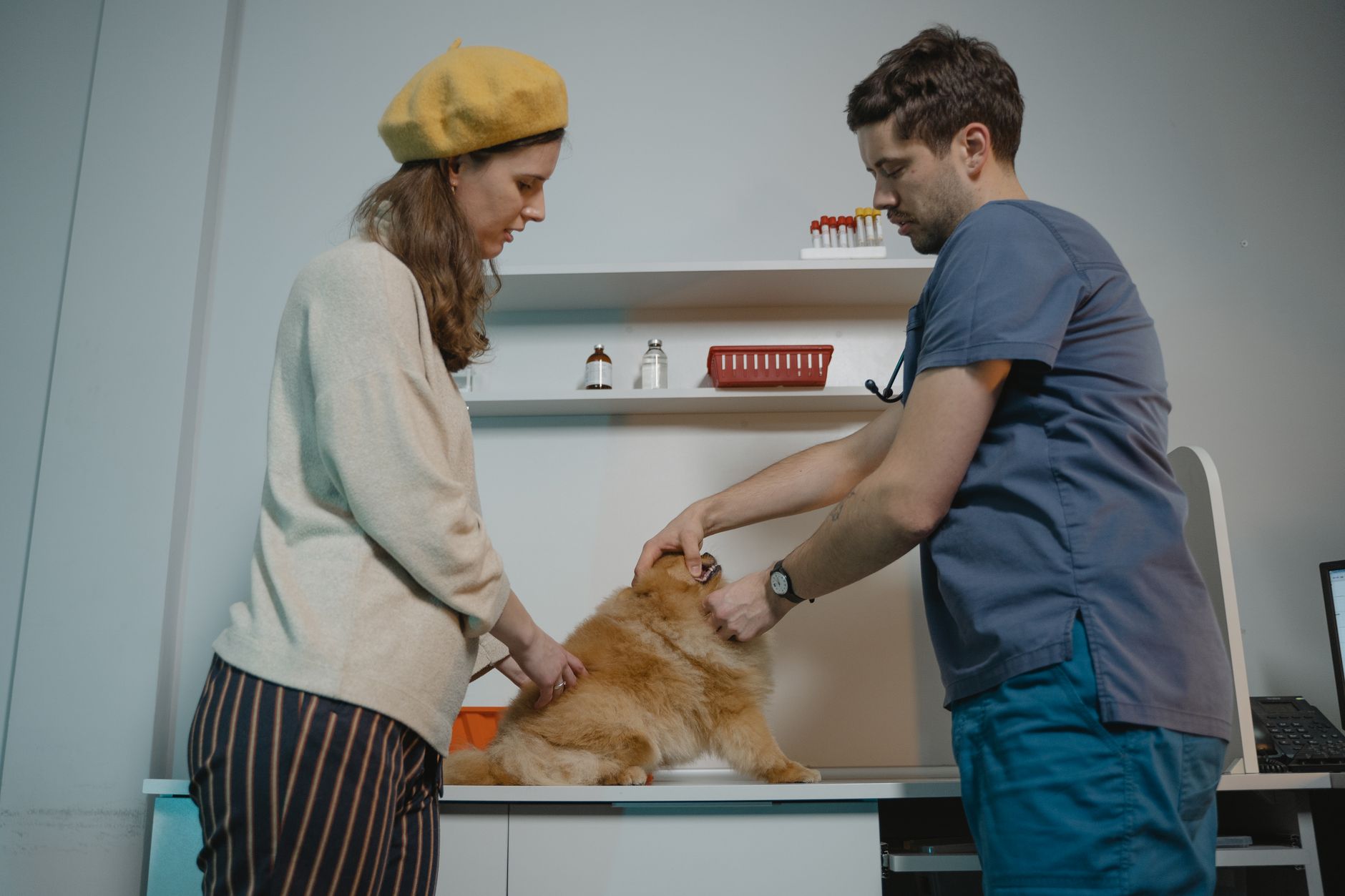
Your consult room table has had a cat, a dog with a weeping ear, and a rabbit through it by 10am, and someone always asks whether the table cover needs changing between every single one. The honest answer is: it depends what’s on it, not just what’s been on it. Get this wrong and you either burn through linen stock (and budget) unnecessarily, or you leave contaminated fabric on a table for the next patient. Here’s what actually needs a fresh wash after every patient, what can run for a session, and what belongs in a proper laundering cycle rather than a home wash.
Table coverings: the rule is fluid, not species
A table covering needs changing the moment it’s had contact with blood, urine, faeces, vomit, discharge or any visibly soiled coat — regardless of whether the next patient is a Chihuahua or a Great Dane. If a consult was dry — a vaccination, a weight check, a nail trim on a calm animal — the covering can often run for the next appointment too, provided your practice protocol allows it and you’re inspecting between uses.
Where practices go wrong is treating “same species, same size” as the deciding factor. It isn’t. A visibly clean cover from a healthy dog can outlast three appointments. A cover that’s had one incontinent senior cat on it needs to come off immediately, no matter what’s booked in next.
Surgical drapes and gowns: every single patient, no exceptions
Anything used in theatre — drapes, gowns, surgical towels — gets laundered and, where required, sterilised after every patient. There’s no judgement call here. Surgical sites are the one area of a vet practice where infection control standards mirror hospital theatre practice closely, and reusing a drape based on how “clean” it looks is not a defensible position if something goes wrong. This is also where the case for outsourcing to a laundry running to EN 14065 RABC standards is strongest — you get a documented, repeatable disinfection cycle rather than a best-guess wash at 40°C in a domestic machine in the staff room.
Isolation ward bedding and coverings follow the same rule: every patient, every time, handled as if contaminated because in an isolation setting, it usually is.
Staff scrub tops and tunics: daily, not per patient — with one exception
Uniform scrubs and tunics don’t need changing between every consult. Daily laundering is the standard most practices run, and it’s adequate for general handling, provided staff change immediately after any visible contamination — a bite wound clean-up, an anal gland expression that goes wrong, a birthing case. The exception that trips practices up is theatre scrubs worn specifically for surgery: those should be treated as a separate garment from day-to-day tunics and laundered after every surgical list, not carried through into afternoon consults. If your practice is still asking staff to take contaminated tunics home in a carrier bag, that’s a liability sitting in someone’s washing machine — we’ve covered the wider question of workwear laundering for exactly this reason, and the same logic that applies to food production PPE applies here.
Kennel and cage bedding: per occupant, always
Bedding, blankets and towels used in kennelling or recovery cages need changing when the animal leaves, full stop — not when it “looks dirty”. Urine-soaked bedding left in a cage between animals is one of the fastest routes to cross-contamination in a practice, and it’s also one of the easiest things to get right, because it just needs a system: strip on discharge, never on a visual check.
Getting the wash right, not just the frequency
Frequency solves half the problem. The wash itself solves the rest. Blood, faeces and discharge are protein and organic soils that need a thermal disinfection cycle to actually kill what’s in them — a domestic 30°C quick wash at home doesn’t get close, whatever the temptation to let staff take kit home to save time. A commercial laundry running at 60°C-plus with a proper hold time, the same standard applied in NHS HTM 01-04 linen processing, is doing something a washing machine in someone’s kitchen cannot replicate. If your current setup relies on staff washing gowns or tunics at home, it’s worth reading what actually happens when practices try to manage this themselves — the short version is that home washing doesn’t reliably decontaminate, and it moves the liability onto an individual member of staff rather than the practice.
This is the same reasoning that applies across healthcare laundry more broadly — dental practices, care homes, hospitals — where the standard isn’t “does it look clean” but “has it actually been disinfected to a documented temperature and hold time”.
What this means for your linen stock
Once you separate “changes every patient” from “changes daily” from “changes per session”, you can work out realistic par levels instead of guessing. Theatre drapes and gowns need enough stock to cover your busiest surgical day with a laundry turnaround built in — usually three to four sets per theatre slot if you’re on a next-day collection. Table coverings need less than practices assume, because most consults are dry. Kennel bedding needs the most volume of all, because occupancy and turnover drive it, not appointment count.
Getting the per-patient rules right protects your patients and your staff, and getting the volumes right protects your budget — but only a laundry partner that understands the difference between a soiled table cover and a contaminated theatre drape will get both right consistently. If your current arrangement is guesswork dressed up as a protocol, get a quote and we’ll work out what your practice actually needs, patient by patient.
Not sure what your practice actually needs washed, and how often?
We’ll look at your patient flow, theatre schedule and kennel occupancy and tell you honestly what needs changing per patient versus per session.