June 2026
Common Housekeeping Mistakes (And How to Fix Them)
Even experienced teams fall into the same traps. Here are the most frequent housekeeping mistakes — and practical fixes that make a real difference.
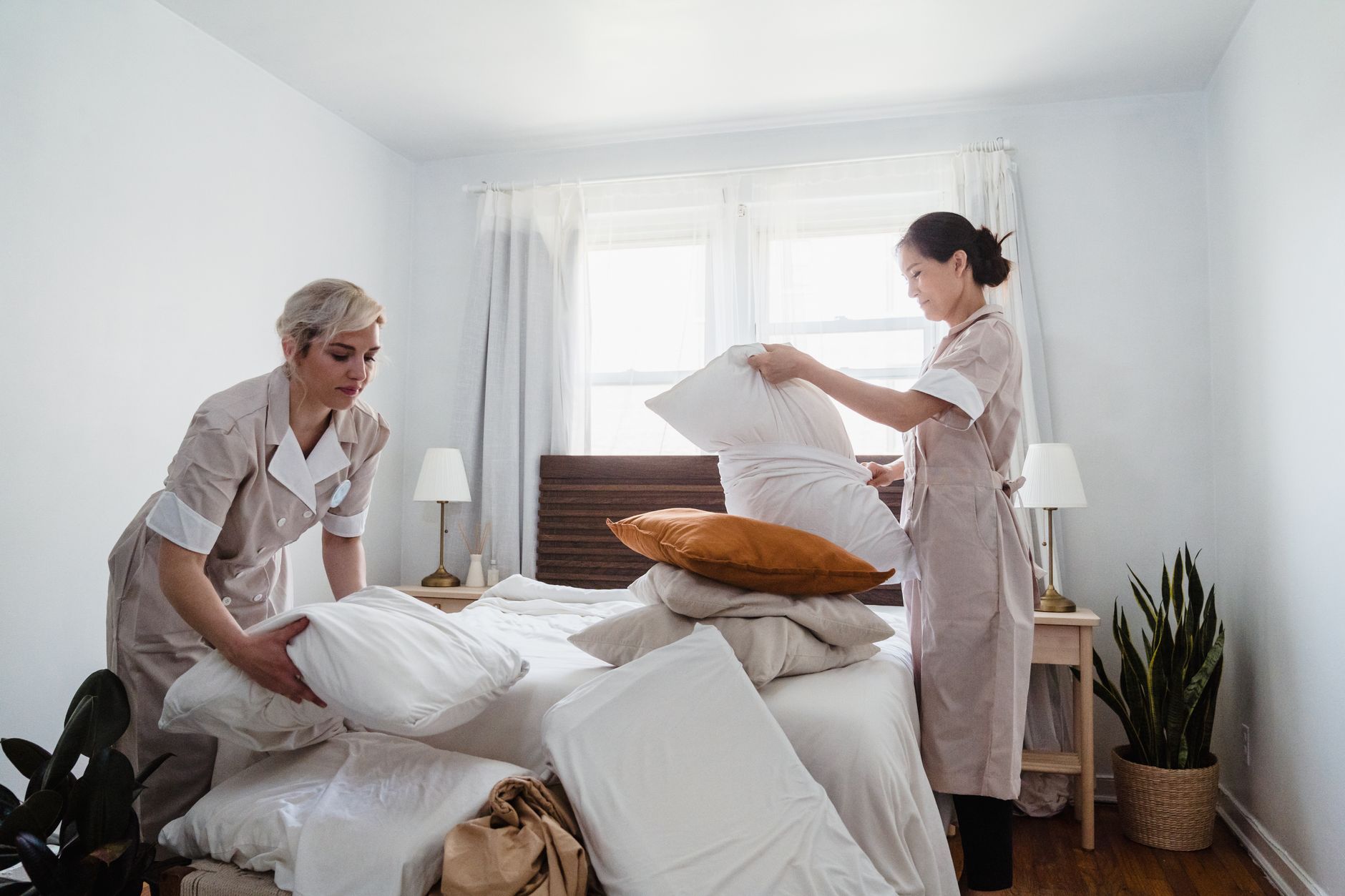
Housekeeping is one of the most demanding jobs in hospitality. Rooms need to turn fast, standards need to stay high, and guests notice everything. Common housekeeping mistakes are often the result of time pressure, poor systems, or habits that have crept in over time — not laziness or carelessness.
The good news is that most of these mistakes are fixable. In this guide we walk through the errors that come up most often, and what you can do about each one. Whether you’re a head housekeeper looking to tighten up the team, or a hotel manager reviewing your operation, there’s something here for you.
1. Rushing the Linen Check
One of the most common housekeeping mistakes is skipping a proper linen inspection before making the bed. A stained sheet or a towel with a small tear gets missed, the guest finds it, and suddenly you have a one-star review about cleanliness.
The fix is straightforward: build a quick visual check into the workflow, not as an optional extra. Hold each item up to the light before it goes on the bed. Any staining, thinning fabric, or damage should go straight to the discard pile — not back on the trolley.
Tip: If you’re finding stained or worn linen frequently, the issue may be upstream. A professional hotel laundry service uses commercial-grade processes that remove stains more effectively than in-house machines, and items are checked before they leave the facility.
2. Inconsistent Cleaning Order
Without a defined sequence, housekeepers work in different orders each time. One person starts with the bathroom, another starts with the bed, another starts by opening windows. The result is patchy quality — some things get missed, others get re-contaminated after they’ve been cleaned.
Bathrooms should always be cleaned last in the overall room sequence but tackled first within a section to allow surfaces time to dry. Bed-making should happen before vacuuming, so any crumbs or debris from the linens fall to the floor before you vacuum it. High surfaces before low surfaces — dust falls downward.
Tip: Put the sequence in writing. A laminated card in the trolley is more useful than verbal instruction. Consistency is what makes quality repeatable.
3. Overloading the Trolley
A trolley packed with too much linen looks efficient but causes problems. Linens get creased or tangled. Items drop on the floor and get used anyway. Towels that were folded cleanly at the start of the shift are crumpled by the third floor.
The right amount of linen on a trolley is enough for the section you’re working, plus one spare set. If the trolley needs refilling mid-section, that’s a linen supply issue — not a reason to overload.
Tip: If linen supply is the underlying problem (never enough, or too much time spent chasing clean stock), it’s worth reviewing whether your laundry operation is keeping up with demand. Erratic in-house laundry output is one of the most common causes of overloaded trolleys.
4. Ignoring High-Touch Points
Light switches, door handles, remote controls, charging cables, wardrobe rails — these are touched by every guest and cleaned by almost no one. A room can look spotless and still have high bacterial load on surfaces that were never wiped.
This isn’t a minor detail. Post-pandemic, guests are more aware of hygiene than ever. And in the UK, the Food Safety Act principles around surface hygiene apply to any accommodation serving food — but the standard is worth applying across the whole room.
Add high-touch points to the room checklist and assign them to a specific step in the cleaning sequence. Use a disinfectant wipe or a cloth with an appropriate product — not the same cloth you used on the bathroom.
Tip: Colour-coded cloths are a simple system that prevents cross-contamination between bathroom and bedroom surfaces. Red for bathroom, blue for bedroom is a widely used standard.
5. Skipping the Final Walkthrough
The final walkthrough is the last line of defence before a guest checks in. Many housekeepers skip it or rush it when time is short. That’s exactly when things get missed.
A proper walkthrough takes ninety seconds. Stand at the door and scan the room. Does it smell clean? Is the bed symmetrical? Are the toiletries aligned? Is there a bin liner in the bin? Is the toilet seat down? Is the window left as you found it?
These details matter more than you might think. Guests form their first impression in the first ten seconds. A room that looks carefully prepared signals quality.
Tip: Make the walkthrough non-negotiable, even under pressure. If the room isn’t right, it’s better to take ninety seconds now than to deal with a complaint later.
6. Poor Linen Rotation (Par Stock Mistakes)
Using the same linen pile repeatedly — always pulling from the top of the stack — means some items get used every day while others sit at the bottom and rarely go out. The frequently used items wear out faster. The stock at the bottom goes stale.
Proper linen rotation means first in, first out. Clean linen returned from laundry goes to the bottom of the pile. The stock on top is what went in last time — it should go out next. This extends the life of your linen across the whole set, not just the bottom layer.
If linen management feels complicated, a structured approach can help — we’ve covered this in detail in our guide to hotel linen hire and management.
Tip: Label shelves with dates if you have space. Even a simple “Week A / Week B” rotation system prevents premature wear on your linen investment.
7. Treating All Stains the Same
Coffee, blood, lipstick, and wine all need different treatments. The most common housekeeping mistake with stained linen is to run it through the wash on a hot cycle and hope for the best. Heat sets protein stains like blood permanently. Cold water dissolves them. A tannin stain like red wine needs enzymatic treatment, not just heat.
Train your team on basic stain categories and first-response actions. A quick cold rinse on a bloodstain, caught early, can save the item. Sending it straight to a hot wash often cannot.
Tip: If staining is a persistent problem — or if in-house washing isn’t removing stains reliably — a commercial laundry service has access to pre-treatment chemistry and process control that in-house machines can’t match.
Most common housekeeping mistakes come down to three things: no written system, time pressure cutting corners, and linen supply problems. Fix the system first — the speed will follow.
One Thing That Fixes Several Mistakes at Once
A number of the mistakes above — stained linen reaching guests, poor stock rotation, supply running short — are symptoms of the same root problem: the laundry operation isn’t keeping pace with the hotel’s needs.
Many UK hotels and B&Bs have reduced in-house laundry pressure by switching to a professional linen service. Clean, inspected, rotation-ready linen arrives when you need it. Your team focuses on the room, not the wash cycle.
If that sounds like it could help your operation, book a free laundry assessment with CanDo — we’ll look at your current setup and tell you honestly whether outsourcing makes sense.
Ready to take linen off your team’s plate?
CanDo Laundry Services supplies clean, inspected hotel linen on a reliable schedule — so your housekeeping team can focus on the room, not the wash.