July 2026
Hospital Linen Management: Best Practices for NHS and Private Healthcare
Hospital linen management is not just a logistics problem — it is a patient safety issue. Here is how NHS trusts and private healthcare facilities can get it right.
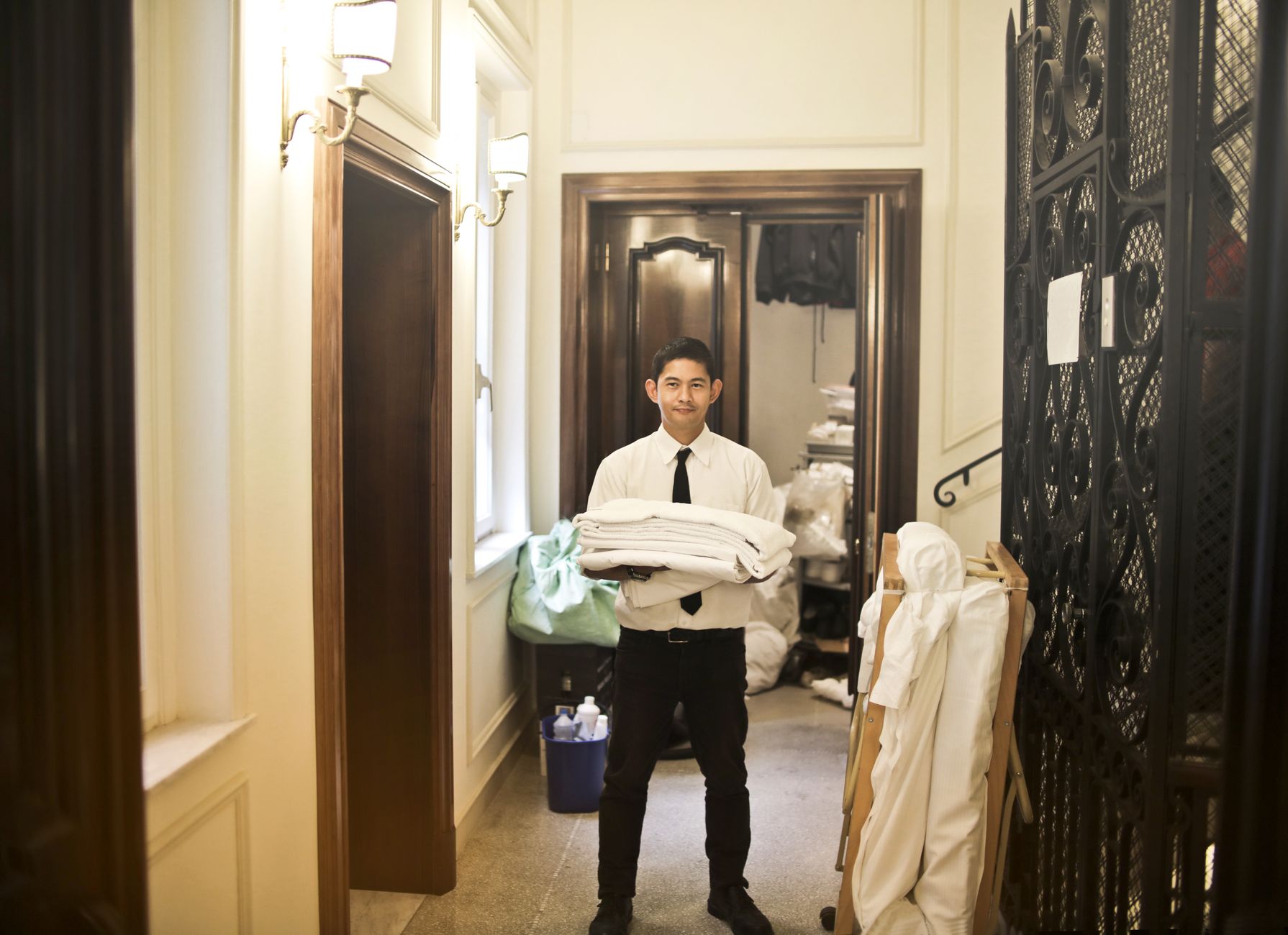
This guide covers what best-practice hospital linen management looks like, the regulatory standards that apply, and the decisions every healthcare procurement manager needs to make about whether to run linen services in-house or through a specialist provider.
Why hospital linen management is different from other sectors
Linen management in hotels or restaurants is largely about efficiency and presentation. In healthcare, the stakes are higher. Used linen from clinical environments — patient gowns, bedsheets, scrubs, theatre drapes — can carry infectious agents. Cross-contamination between used and clean linen is a genuine infection control risk.
The NHS guidance HTM 01-04 (Health Technical Memorandum 01-04: Decontamination of linen for health and social care) sets out the technical requirements that laundry processing for healthcare must meet. These include:
- Thermal disinfection — linen must be processed at temperatures sufficient to eliminate pathogenic organisms. The standard specifies a 65°C wash for at least 10 minutes, or an 85°C wash for at least one minute (the sluice cycle).
- Segregation — used linen must be sorted, bagged, and handled in a way that prevents contact with clean linen at every stage of the process.
- RABC (Risk Analysis and Biocontamination Control) — the laundry facility itself must operate under a documented RABC system, defined in the European standard EN 14065. This is the quality management framework for laundry hygiene, equivalent in principle to HACCP in food safety.
- Transport — clean and used linen must travel in separate vehicles, or in physically separated compartments, with no risk of cross-contamination during transit.
Any healthcare laundry service used by NHS or private facilities must be able to demonstrate compliance with HTM 01-04 and EN 14065. Ask to see their documentation before signing a contract.
Getting par levels right
Par level is the term for the minimum stock of linen a facility needs to have available at any given time to operate safely. In healthcare, calculating par levels incorrectly is one of the most common causes of linen shortages — and shortages have direct clinical consequences.
A typical hospital par calculation takes into account:
Active stock
Linen in use on wards and in clinical areas at any given moment. Calculated from bed count and average length of stay, multiplied by changes per bed per day.
Laundry cycle stock
Linen that is bagged, collected, in processing, or in transit. Based on your collection frequency and the provider’s turnaround time.
Reserve stock
A buffer for unexpected demand spikes — infection outbreaks, emergency admissions, or linen losses. Usually set at 20–30% of active stock.
Written-off allowance
Linen is lost or condemned through wear, staining, or damage. Budget for an annual replacement rate of around 15–25% of total stock.
Tip: If you are repeatedly running short of a specific item — gowns, scrubs, or pillowcases — the problem is almost always insufficient par stock, not an unreliable laundry provider. Review your par calculation before changing supplier.
Segregation and handling on the ward
Best-practice linen management does not begin in the laundry — it begins on the ward. How staff handle used linen directly affects infection risk and the laundry provider’s ability to process it safely.
HTM 01-04 defines four categories of healthcare linen, each requiring different handling:
- Used (soiled) linen — standard ward linen. Placed in white linen bags.
- Foul/infected linen — linen that is heavily soiled with body fluids, or linen from patients in isolation. Placed in water-soluble inner bags inside an outer bag, clearly labelled.
- Heat-labile linen — items that cannot tolerate high-temperature thermal disinfection (e.g. certain specialist garments). Must be processed using a validated chemical disinfection route.
- Linen from patients with certain notifiable conditions — handled according to specific infection control protocols agreed with your Infection Prevention and Control (IPC) team.
Staff training is essential. If ward staff are not correctly categorising and bagging linen, the downstream risk to the laundry workforce and to other patients is real. Include linen handling in your IPC induction programme.
In-house laundry vs outsourced laundry: the healthcare case
Many NHS trusts historically operated on-site laundry facilities. Over the past two decades, the majority have moved to outsourced contracts — either through NHS Shared Business Services frameworks or directly with commercial providers.
The case for outsourcing in healthcare is strong:
- Compliance assurance — a specialist provider maintains HTM 01-04 and EN 14065 compliance as their core business. Maintaining that standard in-house requires dedicated capital investment and specialist management.
- Consistent turnaround — contracted SLAs guarantee turnaround times, reducing the risk of ward shortages.
- Scale efficiency — commercial laundries process linen at volumes that give them significant cost advantages on energy, water, and chemicals versus a single-site hospital laundry.
- Capital release — decommissioning an on-site laundry frees up clinical or administrative space and eliminates equipment replacement costs.
Private hospitals and independent healthcare providers face the same calculation. Running a laundry operation inside a facility that is primarily built for clinical care is rarely efficient — the management overhead, compliance burden, and capital cost almost always make outsourcing the better option.
If you are reviewing your options, our guide to healthcare laundry service covers what to look for in a contract and how to assess whether a provider meets the required standards.
Linen tracking and stock control
Linen loss is a persistent problem in healthcare settings — items go missing on wards, get discarded with clinical waste, or are taken home by patients. Over a year, unmanaged linen loss can represent a significant replacement cost.
Modern linen management systems address this through RFID tagging or barcode tracking, which allows every item to be tracked from issue to collection and through the laundry cycle. Benefits include:
- Accurate real-time stock counts by ward or department
- Automated reorder triggering when stock falls below par
- Loss attribution — identifying where linen is going missing
- Wash cycle data — confirming each item has been processed correctly
- End-of-life tracking — knowing when items have been washed enough times that replacement is due
Not every healthcare provider needs a full RFID system, but even basic barcode tracking at collection and delivery points significantly reduces unexplained losses. Ask your laundry provider what tracking capabilities they offer — it should be part of the service, not an optional extra.
Procurement: what to look for in a healthcare laundry contract
When tendering for a healthcare laundry contract, the compliance checklist matters more than the price. A provider that offers a lower rate but cannot demonstrate HTM 01-04 compliance is not a viable option — the regulatory and reputational risk is too high.
Key questions to ask:
- Can you provide documentation of your EN 14065 RABC certification?
- What is your validated process for foul and infected linen?
- What turnaround SLA do you offer, and what is your process if you miss it?
- Do you carry out regular microbiological testing on processed linen?
- What vehicle standards do you operate for clean/used linen separation during transit?
- What linen tracking system do you use, and can we access reports?
Note on frameworks: NHS procurement for laundry services can be done via the NHS Supply Chain or Crown Commercial Service frameworks, which pre-qualify suppliers on compliance. If you are outside the NHS, asking a provider which frameworks they are listed on is a useful shortcut to due diligence.
Good hospital linen management is not complicated — but it does require clear systems, the right provider, and staff who understand why the procedures matter. Whether you are reviewing an in-house operation or re-tendering an outsourced contract, the checklist above gives you a solid starting point.
Talk to CanDo about healthcare laundry
CanDo works with NHS and private healthcare providers across the UK. If you are reviewing your linen management setup, we can walk you through our compliance credentials and give you a clear picture of what a managed service would look like for your facility.