June 2026
5 Signs You Should Outsource Your Business Laundry
If your laundry operation is quietly draining time, money, or confidence — here are the five clearest signals it’s time to hand it over to a specialist.
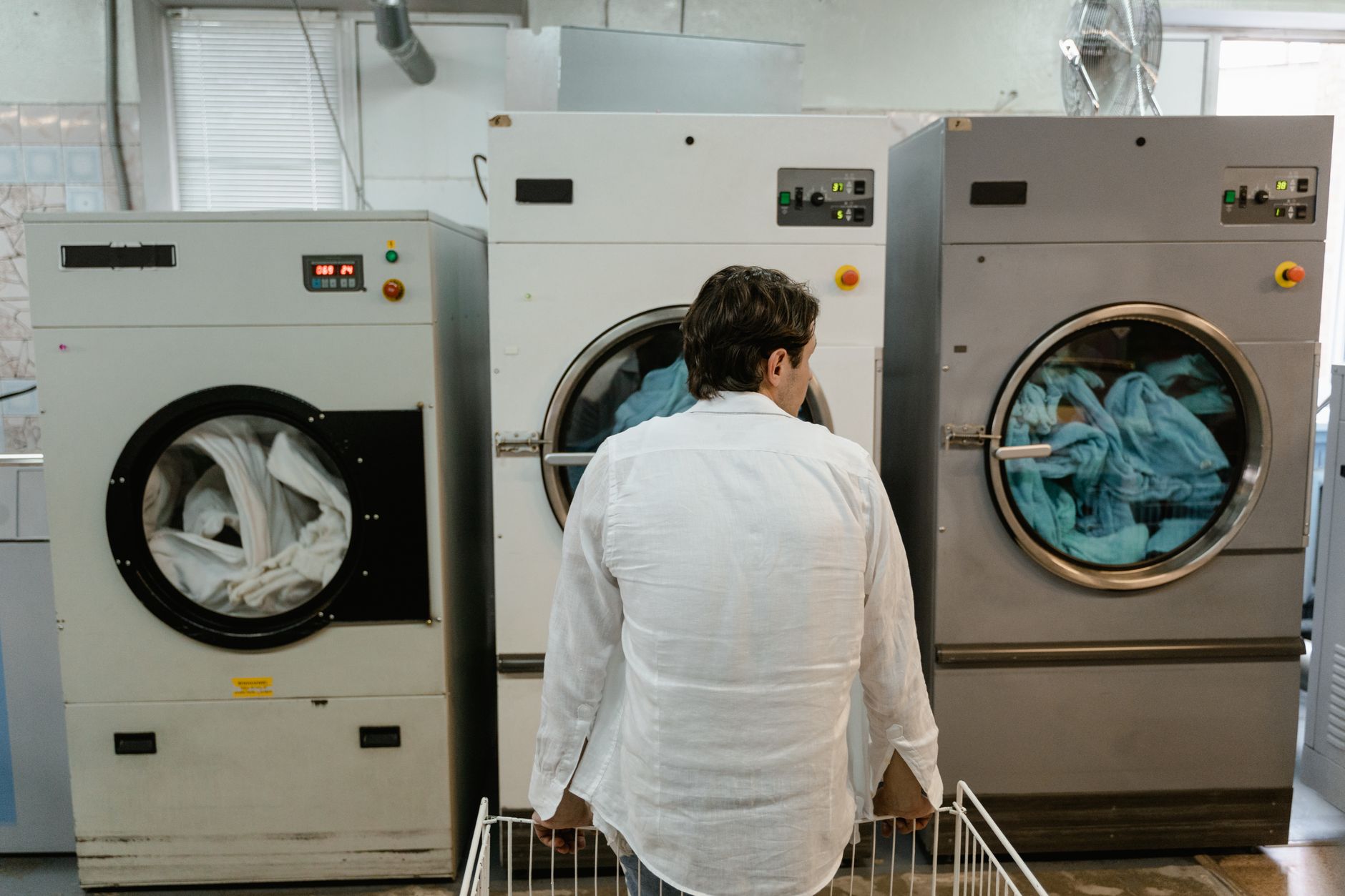
Most businesses don’t decide to outsource their laundry overnight. It’s usually a slow build — a broken machine here, a compliance worry there, a member of staff spending half their morning counting tablecloths instead of doing their actual job. Before long, you’re running an informal laundry operation that nobody planned for and nobody particularly wants.
If any of that sounds familiar, read on. Here are five signs your business laundry should be handled by a commercial laundry service — not you.
Sign 1: Your Staff Are Spending Too Much Time on Laundry
This is the most common one. Think about how much time your team actually spends on linen and laundry — washing, drying, sorting, folding, storing, chasing suppliers. In a hotel, that might be housekeeping staff running loads between cleans. In a restaurant, it could be a manager counting napkins at 7am before service.
That time has a cost. And it’s not just the wage — it’s the opportunity cost. Every hour spent on laundry is an hour not spent on guests, customers, or the things that actually grow your business.
The tip: Add up a rough weekly estimate of time spent on laundry tasks across your team. If it comes to more than a few hours, a restaurant laundry service or hotel linen contract will almost certainly save you money once you account for real labour costs.
Sign 2: You’ve Had a Compliance Concern — or You’re Not Sure You’d Pass an Inspection
Laundry hygiene isn’t just about cleanliness. In food service environments, the Food Safety Act sets out clear requirements for kitchen linen, chef whites, and anything that comes into contact with food. In healthcare and care homes, HTM 01-04 governs how clinical textiles must be thermally disinfected. In hotels, guests trust that their bedding and towels are genuinely clean — not just visually white.
In-house laundry operations often fall short on temperature consistency, detergent dosing, or separation of clean and dirty loads. These aren’t just housekeeping issues — they’re audit risks.
Commercial laundry providers operate to EN 14065, the European standard for hygiene-assured laundry processing. That’s a documented, auditable standard your in-house operation probably can’t match without significant investment.
The tip: If you’ve ever had a concern raised — by a guest, an auditor, or your own team — that’s a signal worth acting on before it becomes a formal complaint.
Sign 3: Your Linen Is Wearing Out Faster Than It Should
Commercial washing machines process linen more gently and consistently than domestic or semi-commercial equipment. They use precise water temperatures, correct detergent volumes, and proper handling processes that preserve fabric integrity over time.
If you’re replacing tablecloths, towels, or uniforms more frequently than expected — if things are greying, pilling, or tearing — your current wash process may be the culprit. Over-washing at the wrong temperature, using the wrong detergents, or simply overloading machines all accelerate linen deterioration.
A good hotel laundry service or commercial linen provider extends linen life, which reduces replacement costs over time. Some businesses find that moving to a managed linen hire model removes the replacement cost entirely — the provider owns the stock and absorbs the wear.
The tip: Track how often you’re replacing key linen items. If it’s more than once every 12–18 months for towels or tablecloths, the replacement cost alone may justify switching to a professional service.
Sign 4: You’re Carrying Too Much (or Too Little) Stock
Managing par stock — the right number of linen sets to cover occupancy, service, and turnaround time — is genuinely difficult. Too little and you’re caught short during a busy period. Too much and you’ve got capital tied up in linen sitting in a cupboard.
Most businesses that do their own laundry overstock as a buffer against unpredictable turnaround times. A hotel might carry three full linen sets per room rather than two, because they can’t guarantee 24-hour washing and return. A restaurant might keep double the napkin count it actually needs because they can’t trust their own turnround.
With a managed commercial laundry contract, turnaround is guaranteed — typically collected one day, returned the next. That reliability lets you run a tighter, cheaper par stock. Less linen owned, less storage space needed, less cash locked up.
The tip: If your linen cupboard is overflowing, or you’re regularly running short, that’s a par stock problem — and it’s usually a symptom of an unreliable in-house wash cycle.
Sign 5: Your Costs Are Opaque — or Growing Without Explanation
When laundry is done in-house, the true cost is rarely visible on a single line in the P&L. It’s spread across wages, utilities, machine maintenance, detergent, linen replacement, and storage. Nobody adds it all up.
When businesses do add it all up — properly, including a fair allocation of staff time and energy — the number is usually higher than expected. For a 50-room hotel running its own laundry, a rough all-in cost estimate typically runs well above what a commercial laundry contract would charge for the same volume. The difference isn’t just money: it’s predictability. A fixed contract means a fixed monthly cost you can actually budget against.
If your laundry costs are growing and you can’t easily explain why, that’s a sign the operation has drifted out of control. An external provider gives you a clear price per item, per collection, per service — no surprises.
The tip: Ask your finance team to pull together the real cost of laundry for one month — all-in, including staff time at their hourly rate. Then compare it against a quote from a commercial provider. The gap is often striking.
Not sure if outsourcing makes sense for your operation? CanDo offers a free laundry assessment — we’ll look at your current setup and give you an honest view of where you’d save and where you wouldn’t. No obligation, no hard sell.
What Happens When You Outsource Your Business Laundry
The process is simpler than most people expect. You agree a collection and delivery schedule, CanDo handles washing, drying, finishing, and return. You get clean linen back when you need it, at a consistent standard, without the management overhead.
Depending on your sector, CanDo can manage hotel linen and towels, restaurant tablecloths and napkins, workwear and staff uniforms, and healthcare textiles. Contracts are flexible — you’re not locked in to a fixed volume, and you can scale up or down with your business.
If you recognise one or more of the signs above in your own operation, the next step is a conversation. CanDo will assess your current laundry setup, give you a clear breakdown of likely costs, and help you decide whether outsourcing genuinely makes sense for you.
Ready to See If Outsourcing Makes Sense for Your Business?
Get a free assessment from CanDo. We’ll review your laundry operation and give you a straight answer — no obligation, no pressure.