
November 2026
How Many Bath Mats Does a Hotel Bathroom Actually Need?
The item housekeeping forgets to count — until a guest stands on a damp towel instead.
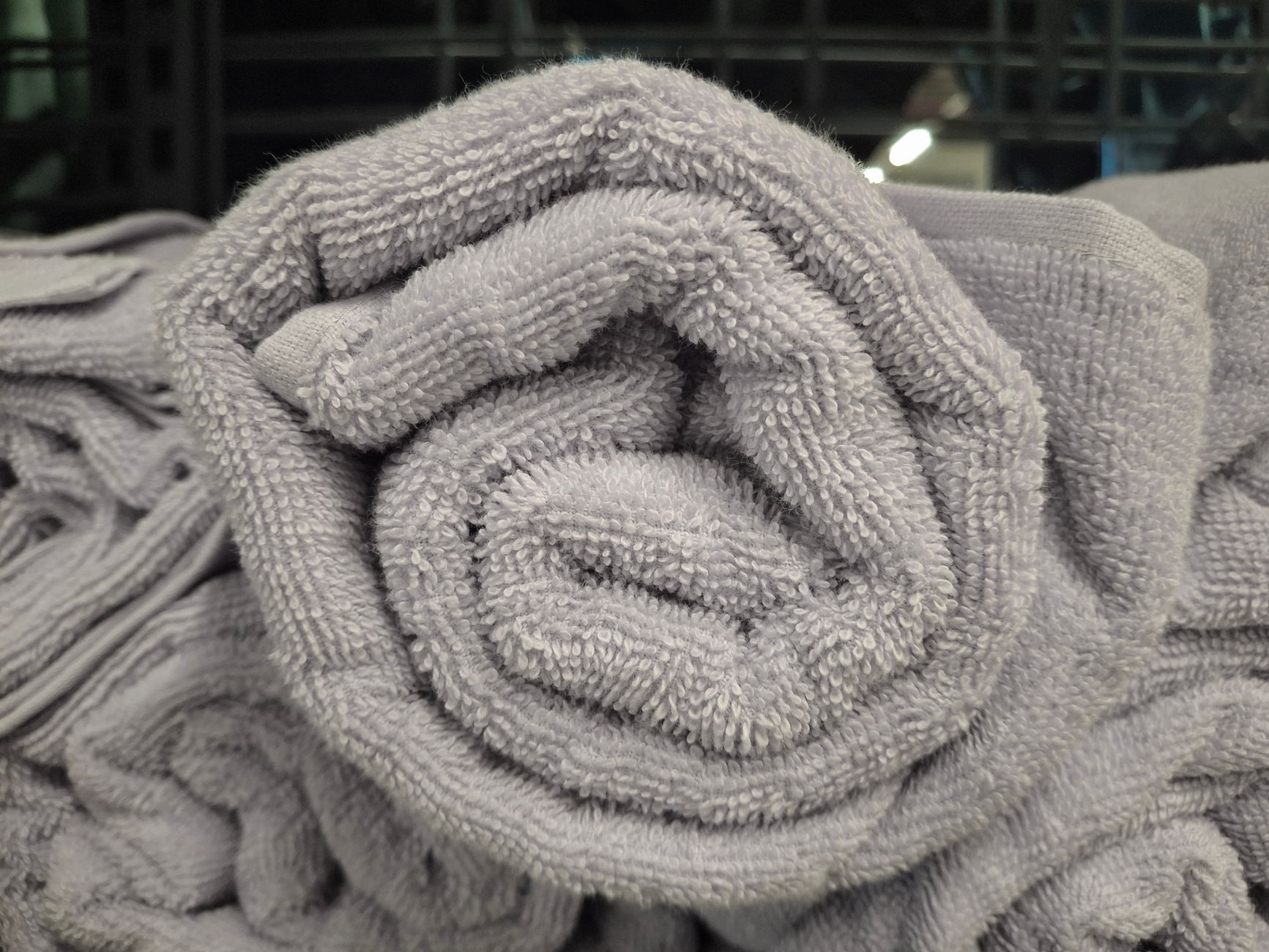
Bath mats get left off the par stock spreadsheet more often than any other linen item. Towels, sheets and pillowcases all get counted properly. Bath mats get ordered as an afterthought, and then housekeeping runs short on a Saturday turnover and guests end up standing on a bath towel to dry their feet. Here’s the number that actually works, and why one mat per room almost never does.
The working par: three per room, not one
For a standard hotel room with daily or stayover cleaning, you need three bath mats in rotation per room: one in use, one in the wash, one as a buffer for delays. That’s the same three-par logic that applies to bed linen and towels, and bath mats fail that logic test more often because they’re cheap enough that buyers assume they don’t need the same discipline.
A single mat per room means every mat has to go from bathroom floor to laundry to bathroom floor in one cycle, with zero slack for a late delivery, a guest who checks in early, or a mat that’s still damp from the wash. Housekeeping trolleys end up short, and the fix on the day is almost always “use a spare towel” — which then shows up as a complaint about damp or dirty towels that has nothing to do with the towels.
On a 60-room hotel laundry contract, that’s 180 mats in circulation rather than 60. It sounds like a lot until you remember mats are small, cheap per unit, and the cost of running short is a one-star review, not a few pence of extra stock.
Why bath mats wear out faster than you’d expect
Bath mats take more abuse per wash than almost anything else in the room. They absorb water straight off wet feet, they get walked on with soap residue and shower gel still on skin, and they sit on tiled or vinyl floors that can trap grit from the bottom of a guest’s shoe the night before. That combination — moisture, friction, and contaminants ground into the pile — breaks down fibres faster than a sheet or pillowcase ever sees.
Cotton loop-pile mats hold up best commercially because the loops resist crushing better than cut pile, and they dry faster between washes, which matters when turnaround is tight. Weight matters too: anything under around 1,000 grams per square metre tends to go thin and flat within a few months of daily commercial laundering. Heavier mats cost more upfront but last through more wash cycles before they need replacing, which is the only number that actually matters for cost per use.
Spa and family rooms need more than three
A room with a separate bath and walk-in shower effectively needs two mats in use at once, not one — which pushes the working par to four or five per room rather than three. The same applies to family rooms with a second washroom, and to any room marketed with a spa bath or jacuzzi, where guests reasonably expect a mat waiting at each wet area rather than one mat dragged between rooms.
If your property runs a spa or treatment area as well as guest rooms, the maths changes again. Treatment rooms turn over mats between every single guest, not once a day, so the par stock calculation looks more like towel turnover in a leisure facility than standard housekeeping — plan on the higher end of your rotation rather than the hotel-room baseline.
Replacement: look for flattening, not just staining
Staining gets a mat pulled from service quickly because it’s visible. Flattening doesn’t, and it’s actually the more common failure mode. A mat that’s lost its loft stops absorbing water properly, which means the next guest steps onto something that feels damp and slippery rather than dry — and that’s a safety issue as much as a presentation one, particularly for older guests or anyone less steady on wet tile.
Run a rough check every few months: press a mat flat with your palm and see how quickly the pile springs back. If it stays flat, it’s past useful life even if it still looks white and clean. Bath mats that have gone thin should be pulled from the room rotation and either retired or moved to lower-visibility use, not left in circulation until someone complains.
Working it through for your property
Take your room count, multiply by three for the baseline par, then add extra for any room with two wet areas, and extra again for spa or treatment rooms running their own turnover. A 60-room hotel with ten family rooms and a small spa might land closer to 220–250 mats in total circulation rather than a flat 180. That’s a worked estimate based on how the par stock model scales, not a fixed number — run it against your own room mix before you order.
Where this tends to go wrong is treating bath mats as a one-off purchase rather than a rental or managed stock item. Mats that are bought once and topped up only when something goes missing drift out of rotation quietly, and nobody notices the par has slipped until a weekend turnover goes wrong. Linen hire stock that’s counted and replaced on a schedule, the same way towels and sheets are, doesn’t have that problem.
Bath mats are a small line item on a linen order and a disproportionately large source of guest complaints when the stock runs thin. If you’re reworking par stock across the property, it’s worth doing bath mats properly at the same time as towels and sheets rather than as an afterthought — get in touch via our quote page and we’ll work through the numbers for your room mix.
Get Your Par Stock Right, Mats Included
We’ll look at your room mix, wet-area count and turnover pattern and tell you what you actually need.