July 2026
Industrial Workwear Laundry Services: What You Need to Know
If your team wears overalls, hi-vis, chef whites or specialist PPE, a professional industrial workwear laundry service takes the hassle off your plate — and keeps your people looking and working their best.
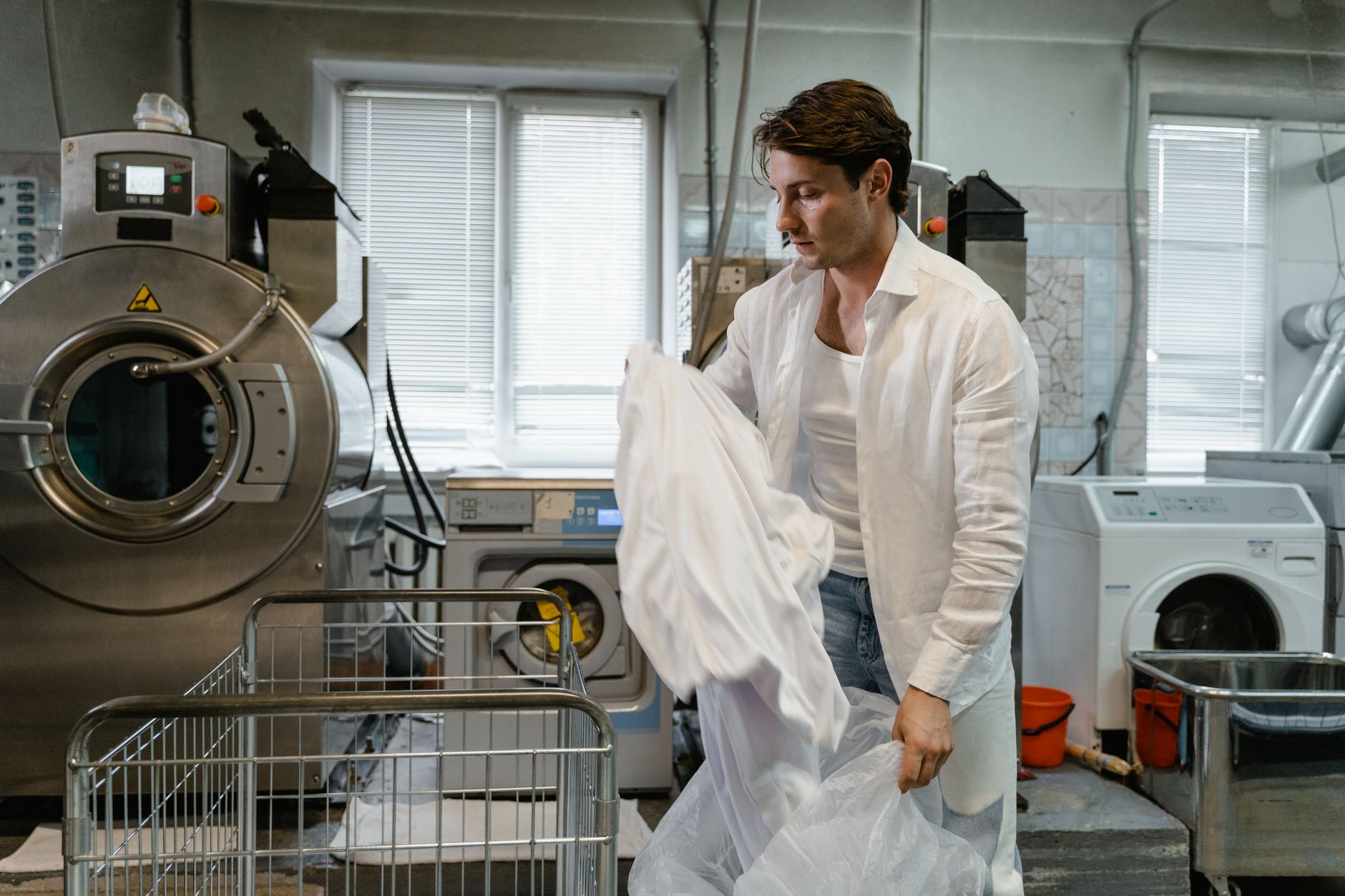
Industrial workwear takes a beating. Grease, chemicals, food residue, heavy soil — domestic washing machines are not designed for it, and on-site laundry rooms are expensive to run and hard to manage at scale. A dedicated industrial workwear laundry service solves all of that: your garments are collected, professionally cleaned to the right standard, and returned ready to wear.
This guide covers what industrial laundry services include, which sectors use them, what to look for in a provider, and how the costs stack up against managing it yourself.
What Does an Industrial Workwear Laundry Service Actually Include?
At its core, an industrial workwear laundry service collects dirty garments from your site, cleans them in commercial-grade machines using the right wash programmes and detergents, and returns them ready for use. But the detail matters.
A good provider will handle:
Collection and delivery
Regular scheduled collections direct from your site — daily, twice-weekly, or weekly depending on your volume. No drop-off trips needed.
Specialist cleaning
Industrial machines with the temperature, detergent and cycle required for each garment type. Overalls, hi-vis, chef whites and PPE each need different treatment.
Inspection and repair
Garments are checked before return. Tears, missing buttons or damaged fastenings get flagged or repaired before the item goes back on shift.
Tracking and inventory
Many services use barcode or RFID tagging so every garment is tracked through the process. You always know what is in circulation and what is at the laundry.
Tip: Ask any prospective provider whether they offer named-employee allocation. Tracking garments to specific workers makes it easier to manage uniform budgets and reduces loss.
Industrial Workwear Laundry Services: Which Sectors Use Them?
Any business with a uniformed or PPE-wearing workforce is a candidate. In practice, these are the sectors where outsourced workwear laundry is most common:
Manufacturing and engineering — Heavy soiling from oils, metalwork and machinery is standard. Industrial wash programmes remove contamination that domestic machines cannot touch, and proper cleaning extends garment life significantly.
Food production and catering — Food safety rules mean chef whites, aprons and kitchen coats must be hygienically clean, not just visually clean. Under the Food Safety Act, businesses have a legal duty to prevent contamination, and linen hygiene is part of that. A professional laundry service supporting your restaurant laundry service or food production site ensures this standard is met consistently.
Construction and civil engineering — Hi-vis jackets, flame-retardant workwear and waterproofs need the right wash chemistry. Incorrect washing can degrade the protective properties of FR (flame-retardant) garments — something an industrial laundry understands and manages carefully.
Logistics and warehousing — High staff turnover and large team sizes make in-house laundry management impractical. Outsourcing simplifies uniform control across multiple shifts and sites.
Healthcare and care homes — Scrubs, tunics and clinical uniforms need thermal disinfection in line with HTM 01-04 requirements. This is a specialist area — see our healthcare laundry service for more detail on clinical linen handling.
Industrial Workwear Laundry vs Managing It In-House
Many businesses default to running an on-site laundry room without really costing it out. The true cost includes the washing machines and tumble dryers (capital and maintenance), energy and water, detergent, staff time to sort, wash, dry and redistribute garments, and the floor space tied up by the equipment.
For a rough sense of scale: a 100-person team might generate 200–300 garments per week. At 45 minutes of handling time per load, and 10–15 loads a week, that is 7–11 hours of staff time before you factor in energy costs or machine downtime. For most businesses, outsourcing becomes cost-neutral or cheaper once you account for everything — not just the wash cycle itself.
Industrial laundries also extend garment life. Commercial machines are calibrated for the correct wash temperature and spin, with the right detergent chemistry for each fabric type. Over-washing in incorrect conditions is one of the main reasons workwear wears out faster than it should.
Tip: Before comparing costs, audit how much your team actually spends on laundry — staff time included. Most businesses underestimate it by a factor of two.
What to Look for in an Industrial Workwear Laundry Provider
Not all services are equal. Here is what to check before signing a contract:
Coverage and collection frequency. Can they collect from your site? How often? A provider with a local depot and flexible scheduling is far more useful than one that requires you to batch garments for weekly collection only.
Sector experience. A laundry experienced with food industry workwear understands hygiene requirements differently from one that mainly handles hotel linen. Ask what sectors they serve and whether they have relevant accreditations.
COSHH compliance. Industrial laundries handle hazardous detergents and contaminated garments. A reputable provider will have documented Control of Substances Hazardous to Health (COSHH) procedures — relevant both to their own staff and to the safe return of your garments.
Garment tracking. If you have a large workforce or expensive specialist PPE, make sure the provider uses a tracking system. Losing garments is a hidden cost that adds up quickly.
Contract flexibility. Avoid long-term lock-ins if your team size fluctuates seasonally. A good provider will offer flexible terms that scale with your business.
Our workwear laundry service covers manufacturing, food production, logistics and more — with regular collections across the UK and named-employee garment tracking available on request.
Common Questions About Industrial Workwear Laundry Services
Can you wash flame-retardant (FR) workwear in a standard industrial laundry?
Only if the laundry understands FR wash requirements. FR garments must be washed without fabric softeners or optical brighteners, which degrade the protective treatment. Always confirm this with any prospective provider before committing.
How quickly can garments be turned around?
Most industrial workwear laundry services operate on a 24–48 hour turnaround for standard garments. For businesses running tight shift patterns, a twice-weekly collection and return cycle usually keeps enough clean stock in rotation.
What happens if a garment is damaged?
Reputable providers inspect garments at every stage. Minor repairs (buttons, seam repairs) are often included or available at low cost. For major damage, they will flag it and advise on replacement — which is more useful than silently returning a compromised item to your team.
Ready to Take Workwear Laundry Off Your Hands?
CanDo handles industrial workwear laundry for manufacturers, food producers, logistics teams and more. Regular collections, professional cleaning, and garments back before your next shift. Get a free quote from CanDo today.