
September 2026
Chef Whites Gone Yellow? Here’s What’s Actually Causing It
It’s rarely the fabric. It’s almost always what’s happening in the wash and dry.
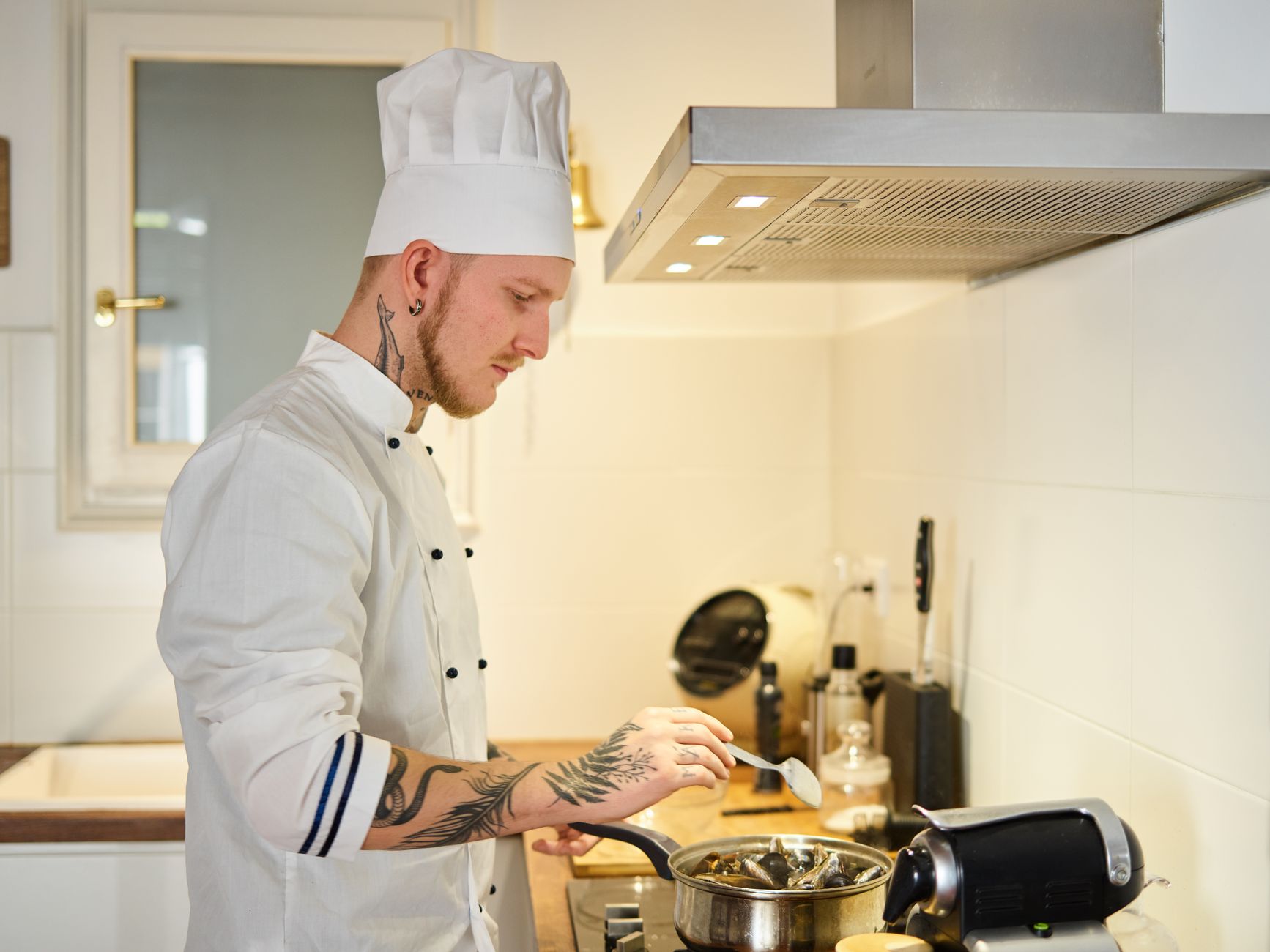
You pulled a jacket off the rail this morning and it looked more custard than white. The kitchen is spotless, the chef swears they only wore it once, and yet three jackets in the same batch have gone the same dull yellow-grey. Why do chef whites go yellow? Almost always it’s one of three things: detergent residue building up in the fibres, iron or minerals in the water reacting with the fabric, or the whites being dried too hot for too long and the fibres scorching slightly each time. Bleach damage and simple fabric age can also do it, but those two are easier to spot once you know what to look for.
Detergent build-up is the most common cause
If every wash uses slightly more detergent than the water can rinse out, the residue sits in the weave. Over weeks it oxidises and turns a pale yellow — worse under arms and at the collar where sweat and oil add to it. This is a dosing problem, not a fabric problem.
The fix is simple but often ignored: check the detergent dose against your actual water hardness and load weight, not a generic setting from months ago. Too little detergent leaves grease behind; too much leaves residue behind. Both look like yellowing eventually. A proper final rinse cycle matters more here than most kitchens realise — cutting it short to save time is usually what starts the problem.
Hard water and iron staining
If your yellowing has a slightly orange or rust tint rather than a flat custard colour, look at the water supply before you look at the wash programme. Iron and manganese in hard water bind to cotton fibres and oxidise with heat, producing a yellow-orange discolouration that gets worse with every hot wash. It’s common in older buildings with galvanised pipework, and it will affect towels and linen the same way it affects chef whites, so if your bar towels are yellowing too, that’s your confirmation.
Water softening or a rust-specific pre-treatment before the main wash resolves this. Standard detergent and standard bleach won’t touch it, and heavier bleaching often makes it worse by fixing the stain rather than lifting it.
Over-drying is quietly scorching the fabric
Cotton and cotton-poly chef whites are more heat-sensitive than most kitchens assume. A tumble dryer run too hot, or for too long after the load is already dry, causes a very slight scorch that shows as a warm yellow tint — most visible on collars, cuffs and anywhere the fabric doubles over on itself during the cycle. It’s subtle enough that most people blame the wash, not the dry.
If jackets come out of the dryer noticeably hotter than they need to be, or the cycle runs long “just in case”, that’s your answer. Cotton whites should come out warm, not hot, and the cycle should end as soon as the load is dry rather than running a fixed extra ten minutes.
How to tell it’s not just age or bleach damage
Fabric that’s simply old goes grey and thin rather than yellow — the weave loosens and the whiteness fades evenly. That’s wear, and no amount of re-washing brings it back. Bleach damage looks different again: it weakens the fibre first, so you’ll usually see thinning or small holes alongside any colour change, and it tends to be patchy rather than uniform.
True yellowing from residue, water minerals or heat is usually even across the garment and appears on jackets that are otherwise in good condition — strong seams, no thinning, no holes. If that’s what you’re looking at, it’s a process issue you can fix, not a garment you need to replace.
What actually gets whites back to white
Once you’ve identified the cause, the fix is specific to it:
For detergent build-up: run an extra rinse cycle on the affected batch with no detergent at all, then correct the dosing going forward. This alone often lifts most of the tint.
For hard water staining: a rust-remover pre-treatment (not bleach) followed by a wash with a water softener added will usually recover the garment. Ongoing prevention needs a permanent water treatment fix, not a per-wash workaround.
For heat scorching: there’s no undoing it on the affected garments — the fibre itself has changed. Adjust the drying programme so it doesn’t happen to the next batch.
If none of this shifts it after two attempts, the garment has probably reached the end of its useful life, and no amount of re-washing will bring it back. That’s a normal part of a laundry cycle for any kitchen — the question is whether it’s happening after twenty washes or two hundred.
Why kitchens keep hitting this problem in-house
Getting dosing, water treatment and drying temperature right consistently, load after load, day after day, is harder than it looks — and it’s the reason most kitchens that try to manage whites on-site end up with a drawer of yellowed jackets within a few months. A commercial restaurant linen service runs the same equipment at commercial volume with water treatment and dosing calibrated for exactly this fabric, which is why chef whites processed through a proper laundry stay white for far longer than the same garment washed in a kitchen’s own machine. The same logic applies to any uniform under heat and grease stress — it’s the same reasoning behind why most kitchens and hotels eventually move their workwear laundry off-site entirely.
Get whites that stay white
If your chef jackets are yellowing faster than they should, the fix is usually in the process — not the garment.